

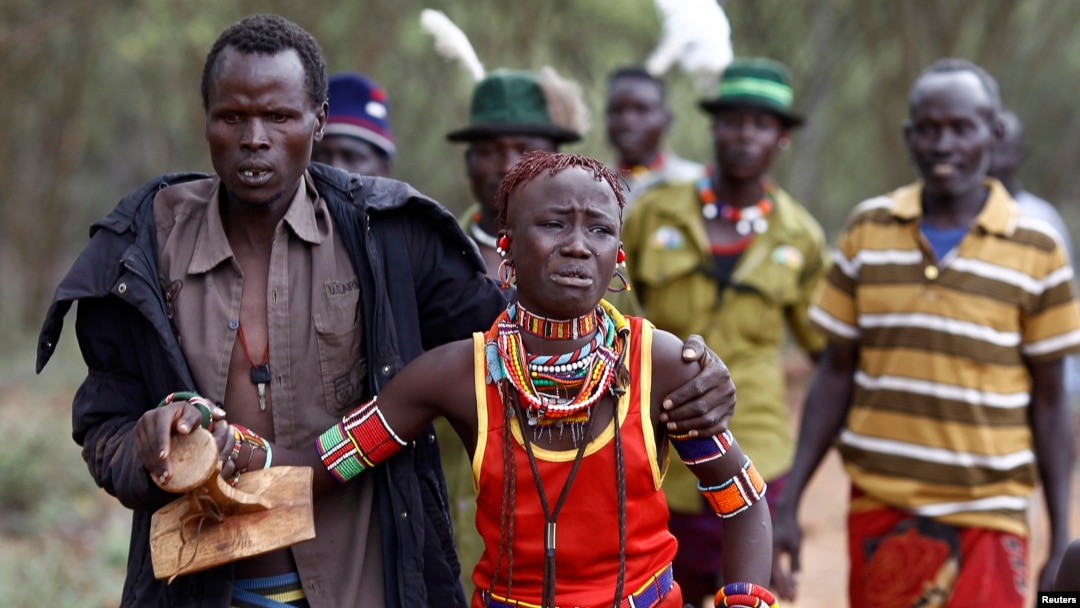
Across Africa, marriage traditions have taken many different forms. Some involved elaborate ceremonies, negotiations between families, bride price and community blessings. But in some African communities, there was also a far more controversial practice: bride kidnapping.
The practice involved a man, sometimes with the help of his friends or relatives, taking a woman away with the intention of making her his wife.
Although the practice was never a universal African tradition, historical and contemporary reports have documented forms of marriage by abduction in parts of Ethiopia, Kenya, Rwanda and South Africa, among others.

Ethiopia
Ethiopia has one of the most frequently documented histories of bride abduction in Africa.
In some rural communities, a man who wanted to marry a woman could arrange for her to be taken away, particularly when negotiations with her family had failed or when the families disagreed about the proposed marriage.
After the woman was taken, discussions between the two families could follow. In some cases, the abduction was treated as a pathway toward marriage.
But there was an important distinction: not every case involved a woman who wanted to marry her abductor.
For women and girls who did not consent, the experience could involve intimidation, sexual violence and forced marriage.
Kenya
Forms of marriage by abduction have also been documented among some Kenyan communities.
Among certain groups, historical customs allowed a man to take a woman he intended to marry and subsequently begin negotiations with her family.
The practice could be connected to traditional marriage arrangements, including negotiations surrounding bride price.
However, it would be inaccurate to say that Kenyan men generally had permission to kidnap women. These were specific traditional practices found in particular communities and circumstances, not a rule applying to the entire country.
Rwanda
Historical accounts of marriage by abduction have also been associated with parts of Rwanda.
The practice could involve a man taking a woman without first obtaining the normal approval associated with marriage negotiations.
Once the woman had been taken, families could become involved in determining what would happen next.
For women who did not consent, however, the consequences could be severe. Being abducted could leave a woman under enormous pressure to remain with the man because of family expectations and social stigma.
South Africa
Some South African communities also have historical accounts of marriage practices involving abduction.
These traditions varied significantly between ethnic groups and historical periods. In some circumstances, what was described as abduction could involve a couple attempting to bypass family objections, while other cases involved genuine coercion.
This distinction is important because not every historical account of “bride kidnapping” means the same thing.
Why Did It Happen?
There was no single reason for bride kidnapping in Africa.
In some communities, marriage was traditionally viewed as an agreement between families rather than simply a decision made by two individuals.
Bride price, family approval, social status and disputes between families could all influence marriage arrangements.
When a man could not obtain the agreement he wanted, abduction could sometimes be used as a way to force the situation forward.
But cultural acceptance in a particular historical setting should not be confused with genuine consent.
Is Bride Kidnapping Still Allowed in Africa?
Today, kidnapping a woman and forcing her into marriage is not a general legal right anywhere in Africa.
African countries have laws protecting people from kidnapping, sexual violence and forced marriage. Nevertheless, reports of marriage by abduction have continued to emerge from some rural areas, showing that changing the law does not always immediately eliminate deeply rooted customs.
Modern African societies are also increasingly emphasizing the importance of individual consent.
The Real Story Behind the Viral Headline
The claim that there is an African tribe where “men are permitted to kidnap any woman they want to marry” is therefore an oversimplification.
A more accurate description is that certain African communities historically practiced forms of bride abduction as part of their marriage customs.
In some cases, the woman and man may have wanted to marry but used abduction to overcome family opposition. In other cases, women were genuinely taken against their will and forced into marriage.
The difference matters.
Africa has thousands of ethnic groups and hundreds of different cultural traditions. A practice documented in one community cannot fairly be presented as something practiced by all Africans.
What makes the history of bride kidnapping fascinating—and disturbing—is the way it reveals how marriage, family authority, tradition and personal choice sometimes came into conflict.
And today, one principle increasingly stands above traditional marriage customs across the continent:
A woman should have the freedom to choose whether or not she wants to marry.
