

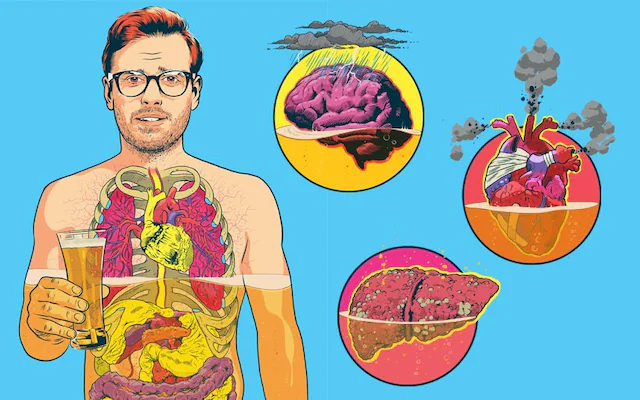
Here is a breakdown of the rapid internal responses:
Immediate Absorption: Alcohol does not need to be digested like food. A small amount is absorbed immediately through the lining of your mouth and tongue. The rest travels to the stomach, where up to 20% is absorbed, and then rapidly into the bloodstream via the small intestine.
Rapid Distribution: Once in the bloodstream, alcohol is quickly circulated throughout your body, reaching your brain within about 5 to 10 minutes.

Brain Effects: In the brain, alcohol begins to interfere with communication pathways and neurotransmitters. This causes:
Dopamine and Serotonin Release: An initial release of “feel-good” neurotransmitters, which can lead to feelings of relaxation, euphoria, and increased sociability.
Central Nervous System (CNS) Depression: Alcohol is a CNS depressant, meaning it slows down brain activity and neural messaging. This quickly results in lowered inhibitions, impaired judgment, and slower reaction times.
Blood Vessel Dilation: Alcohol acts as a vasodilator, widening your blood vessels. This causes a temporary feeling of warmth and skin flushing, but also leads to rapid heat loss and a drop in overall body temperature.
Liver Prioritization: Your body prioritizes breaking down alcohol, which it recognizes as a toxin, over other bodily functions. The liver begins producing the enzyme alcohol dehydrogenase to metabolize the ethanol into acetaldehyde (a toxic byproduct), and then into less harmful acetic acid.
Hormonal Changes: The production of the antidiuretic hormone (ADH) in the brain is suppressed. This tells your kidneys to release more water, leading to increased urination and eventual dehydration.
