

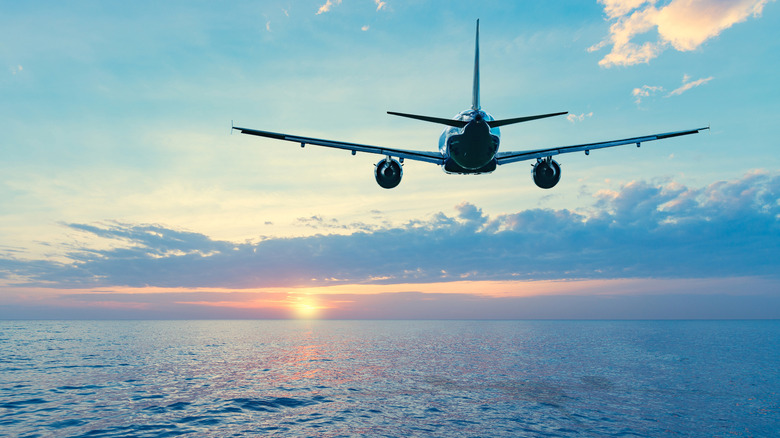
Many people have noticed that commercial flight routes often appear to avoid flying directly across the Pacific Ocean. While this may seem strange or even mysterious, there are practical reasons behind the routes airlines choose.
One major reason is that aircraft typically follow curved routes rather than what appears to be a straight line on a flat map. Because the Earth is spherical, the shortest distance between two locations can actually follow a curved path when viewed on a conventional map. These routes, known as great-circle routes, can help airlines reduce travel time, fuel consumption, and operating costs.
For flights between North America and Asia, for example, aircraft may travel along routes that curve toward the north rather than taking a seemingly straight path across the middle of the Pacific. These routes can be more efficient and may also provide suitable options for emergency diversions if necessary.
Ultimately, airlines carefully plan flight paths to balance distance, fuel efficiency, travel time, safety, and operational costs. So, the apparent avoidance of the Pacific is not due to anything mysterious, but largely because of how the Earth’s shape and aviation planning affect the most efficient routes.
Power Of Favor? (Silent, Spiritual, Dominant) You won't miss out on your desires with silent, spiritual and dominant power of favor against obstacles(spiritual and physical) Dominate and achieve with DOMINANT POWER OF FAVOR. DESIRES: in undertakings, business, profession, patronage, office work, occupation, etc POSITION: leadership position, financial position, attractive position, elevation, fame, power, etc. LOVE: reunion with lover, love matters, marriage, etc OTHER MATTERS: people/crowd, alternative healings, herbs, prevention/protection, etc For more on Dominant Power Of Favor, spiritual consultation, solutions, Call/ Whatsapp Dr. J.A. Faros on 07030514063. All power to God

1 Comment
Leave Your Review